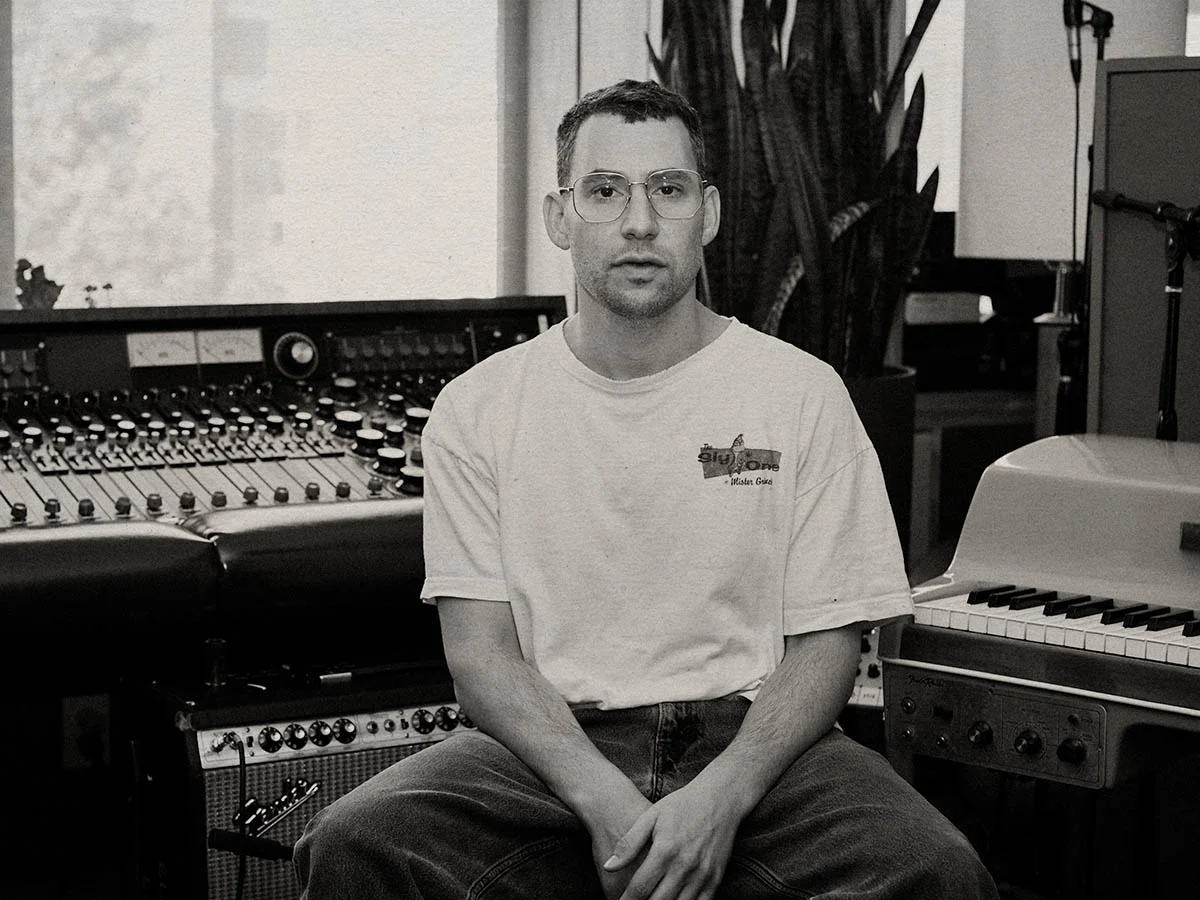
Bleachers are on the edge of their biggest year yet. Fresh off their 2024 self-titled album and gearing up to release everyone for ten minutes in May, Jack Antonoff is leading the band into a new era shaped as much by cultural exhaustion as it is by the love, grief and community that have always defined Bleachers. Ahead of the new LP, we caught up with Antonoff to talk about his “Bleachers people,” protecting art from commerce and why you definitely should not expect to see Bleachers at the Sphere anytime soon — you can, however, see them in Nashville at The Truth Oct. 8 as a part of the new Nashville venue’s opening week of shows.
On the Record: Q&A with Jack Antonoff
Carly Butler: Okay, Jack, I want you to know that I am not a journalist. I work at WNXP here in Nashville, but I am a Bleachers fan. I’ve been to 30 Bleachers shows since 2014.
Jack Antonoff: I know you.
CB: Ok, good. I wanted to have that as a background, so we know that I’m coming at this from a the call is coming from inside the house kind of way, as opposed to, “I want a gotcha. I want to ask you some stupid questions.”
JA: Oh, you can get me harder than anyone.
CB: I would hope so. I’ve been listening to this album a lot this week since they sent it to me. I love it. It’s kind of hard to dethrone Gone Now as my favorite Bleachers record, but I think it might.
JA: It’s cut from an oddly similar cloth. I realized that the other day. When I finish something, I start to listen to everything before it, like, right before something comes out I kind of go through the whole discography. Gone Now had this grand, weird sureness and lostness all at once. The lostness in Gone Now is so personal. Now I feel like the lostness in everyone for ten minutes is more about the world and culture. But there’s something about them that are similar to me.
CB: I was following this story you’re telling, from the beginning of the record in “the van” — where you’re talking about Outline and these early sweaty basement shows — and that string to “dirty wedding dress,” when you’re doing the “only my people can see me” thing, which feels, really, like the ethos of a lot of this record to me.
JA: That is the headline. Yeah, I’m always writing about loss and grief and love and community and life. That’s the core. That’s just my existence. But then there’s always an upper layer, an entry point. You know, Take the Sadness Out of Saturday Night was so much about falling in love, and self-titled had this joy to it. And this is sort of like: there’s something sick out there and we have to get away from it. Culture, art and commerce are smashing together in this repugnant way, and I’m just so tired of just not calling it what the f— it is.
CB: Yeah, and you and I, I think we’re in the same place where we find a lot of solace and escape from that in a Bleachers show and a Bleachers album, right. It’s this place that we can both go, obviously from separate angles, of, like, you’re making this, you’re calling the people in, you’re opening the door to everyone for ten minutes, which I love — that AirDrop idea. I didn’t realize that when I heard the album title for the first time. It makes sense that you’re opening this door for 10 minutes and saying, okay, get in, everybody get in, that can make it in. But the only people who are going to stay after that 10 minutes are your people. And that’s the people that you want to be in that room with.
JA: Yeah, I think about it, like this idea of letting the right one in. Obviously I got married, I have this band and this friend group, I have my collaborators. It’s just so powerful to me how rich and important one’s time and experience can be if you let the right people in. And I think that’s always been an obvious concept, but there’s a lot of letting terrible stuff in these days.
CB: You have to be really intentional with your time and your space, where we’re waking up and you can’t get on your phone without seeing the worst shit in the entire world happening.
JA: It’s a big part of how I think nowadays. Where we’re at, no matter where you are on any political or cultural spectrum, the one thing everyone agrees about is: this sucks. Call it “touch grass,” call it whatever you want, everyone wants to get back to a version of the world that isn’t architected by incels. Totally understandably. You come to a show and it’s like, I’m going to be the architect of that because of a lifetime of experience of opening my heart, playing music and communicating with people. That’s what I do. I don’t want to be a senator. That’s what I do. And now we have these people architecting how we communicate who are not communicators.
You know, I’m happy for Elon to build me a car — which, not anymore I wouldn’t be — but why does this person have any say in how we communicate? It’s the death of expertise. It makes me double down even further into what I do. This is how I communicate. This is what I do. I’m so aware of how to do this thing, and I just want to push further down that road. And also, in the process of talking about love and loss and matters of the heart, take some piss out and have a laugh as a method of redirecting like, no, that is bullshit.
You think you’re being marketed to too much? You are. There’s just so much. Even in the music community, it’s a tiny thing but I’m devastated by the way a lot of music listeners talk about stats and things like that. That’s not your idea. You don’t care. That’s the man upstairs’ idea. No music fan cares about that stuff. This should be such a protected space. That’s why I bitch about Live Nation so much. This is church. This should be a protected space. This isn’t Kmart.

CB: So much about the Bleachers experience to me is obviously the albums. That’s the basis, the bread and butter. But the shows are where I fell in love with this music and this band. I’m so excited that you’re coming to Nashville in October to play this new venue. It’s not even open yet, or I think even really announced yet.
JA: Does it exist yet?
CB: It’s there, I think.
JA: They better finish it.
CB: I hope so. They have an opening date in the fall, that’s all I know. But I’m really excited — you’re probably going to be the first show I see there. And I noticed the Nashville show is the last on that list of cities. I have the unique experience of having seen a Bleachers show at the beginning of a tour versus the end. They’re very different shows. What happens from the beginning to the end of that is a mystery to me. I’ve never played a live show like that, but I’ve been to so many and I see that shift. How do those changes manifest for you, and do you think this album will be different live than anything else?
JA: It’s always so different, and it never ceases to blow my mind how you take with you everything you know and then also become like a baby again. They’re all glorious in different ways. The beginning of the tour is so vulnerable because you just don’t know what is going to connect. And I’m at the point now where I’m like, even the things that don’t connect, there’s a beauty in that.
You make little decisions and it throws the whole set. Nothing is inconsequential. You add a song in — it’s not like that worked or didn’t work. It changes the arc of the whole thing. And so when you get to the end of the tour, you have such a sense of the movement of a show, and that’s a different kind of beautiful thing because that almost becomes, like, theater or something. Everything is moving and you know emotionally where to take it. And that’s a different joy because you can dig even deeper into it.
So I find beginning of a tour to be chaotic, and I find the end of a tour to be emotionally chaotic because you know where the buttons are and you’re hitting them really hard. It’s weird, it’s no different than making albums. No matter how “good” you get at it or how “experienced” you are — you pretty quickly realize that’s not the part that matters. That’s a tool to play with. It’s no different than like when I’m producing, it’s like, “Cool, I know how to do this. Fun.” That’s not the part that matters. Making records, you’re trying to hit something transcendent. Playing shows, you’re trying to hit something transcendent. There’s no level of skill that becomes a shortcut to there. That’s why I love it so much and have based my life in it, because it’s not something you master in a way that lets you become complacent. I can’t get onstage and be like, I know how to do this.
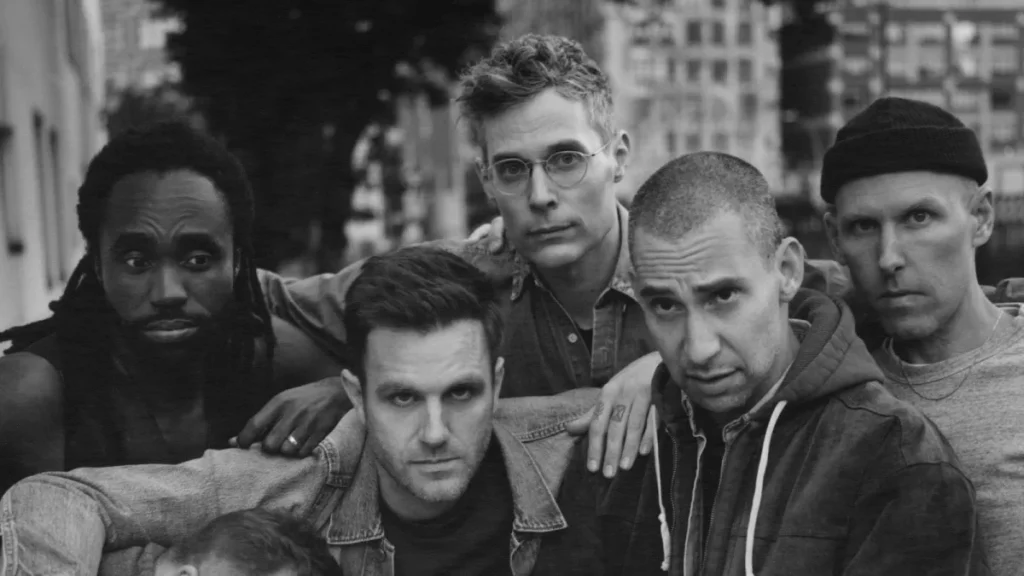
CB: But also, you just have such a tight live band. The lineup has been with you for so long. That’s kind of when I proselytize about Bleachers, I’m like, they make great albums, but the show is — the entire band, every dude you have on that stage with you is just…
JA: It’s something. It’s a point of pride — and I don’t mean that arrogantly — but as the aesthetic of the band has come into fashion again, there’s this idea of, okay, I look like a band, I dress like a band, I got a band onstage. But that’s like throwing on one of those f—ing Rasta hats with the fake dreads in the back. It’s a culture and a lifestyle.
A band is a group of people who have spent an absurd amount of time together — an uncomfortably weird amount of time together. The only other references would be school or work or a marriage. It’s this absurd amount of time spent together and do a thing together they are very specifically experts at, and then this telepathic thing starts happening. That’s not an aesthetic. That’s a life experience. That’s more than 10,000 hours. It’s also a group of people who understand what it means to travel and to show up in different towns.
This is why I’ve been talking so much smack about the whole residency thing.
CB: Oh, don’t even get me started.
JA: Well, there’s the commercial part of it, which is like, please don’t transfer the cost to the fans.
CB: That’s exactly what’s happening.
JA: And by the way, I like the concept of residency here and there. But touring — the whole “they’re in my town” feeling — that’s what it is. We were in Cincinnati last night. We’re in Nashville the next night. It’s a new world. There are people traveling with us, people seeing it for the first time, there’s the people that this is one of 100 shows they’ll see all year and people who this is the only show they’ll see all year. But it’s the barrier of entry. I’m going through a lot. The band’s going through a lot. The crew’s going through a lot. And you’re going through a lot. And that binds us in the room. The second you take that out of it, it’s not tour. It’s a different thing, you know? It’s Broadway. There’s a beauty to that, too, but that’s not what we’re doing.
CB: It’s Broadway.
JA: Yeah. And I love that too. But when you dress like a band and you act like a band and you want to play like a band, that’s all well and good. But a band tours. And a band does that million hours to create that culture.
CB: So you’re saying not to expect to see Bleachers at the Sphere next year?
JA: The day I show up at the Sphere is the day you can say, “Okay, that thing is no longer what it was.” There are very few things I dislike as much as the Sphere — because of the residency thing, but also because I’m in a very anti-screen moment as well.
CB: I get that. It’s hard.
JA: I think we’ve had enough. The Sphere is basically like high-level gooning. It’s gooning without some of the edges of gooning. But do you really feel like we can transcend through multiple screens? I think the data is there. What me and the band can do onstage with nothing going on — that’s it.
CB: It can’t be masked by this ginormous screen. You’re losing everything good about it.
JA: The only Sphere I would ever do, it’d have to end up being a Sphere troll. It’d be Hutch’s face, and then it multiplies, and I’d want to project “Hutch sucks” over the whole Sphere for 30 minutes. I wouldn’t want to take people into the forest on the Sphere. I’d want to go play in the f—ing forest.
CB: I first saw you in August of 2014 in Indianapolis. That’s the city I’ve seen Bleachers in the most.
JA: That was a really important show for me because I remember specifically having a meeting with the band backstage. At that time I was still kind of in two bands. We sat backstage and I was like, I’m not going to do anything but this band. The only person in the room who was stressed was a really old friend, John Shiffman, our drummer at the time, who wasn’t really planning on going on tour full-time. I remember it being this really powerful moment because all at once we were like, we’re doing this and only this. And I think he was like, I can’t tour. But that’s how we got Riddles.
CB: Oh, and everybody loves Riddles. Fan favorite.
JA: Yeah. Well, let’s hope our Nashville venue gets completed.
CB: I hope so.
JA: I’m terrified and joyous to play new venues. I really never want to put my people in any sort of weird space. There are a few on this tour that are brand new venues. And, man, the labor we go through with the people I work with to understand the layout — where do people enter, who’s security, the whole thing — it’s a lot. So I have a really good feeling about it, but we’ll see.
CB: I do too. I’m very much looking forward to it. Thank you for taking the time to talk with me today. I’m really excited about this record, and I am very proud to be a Bleachers person.