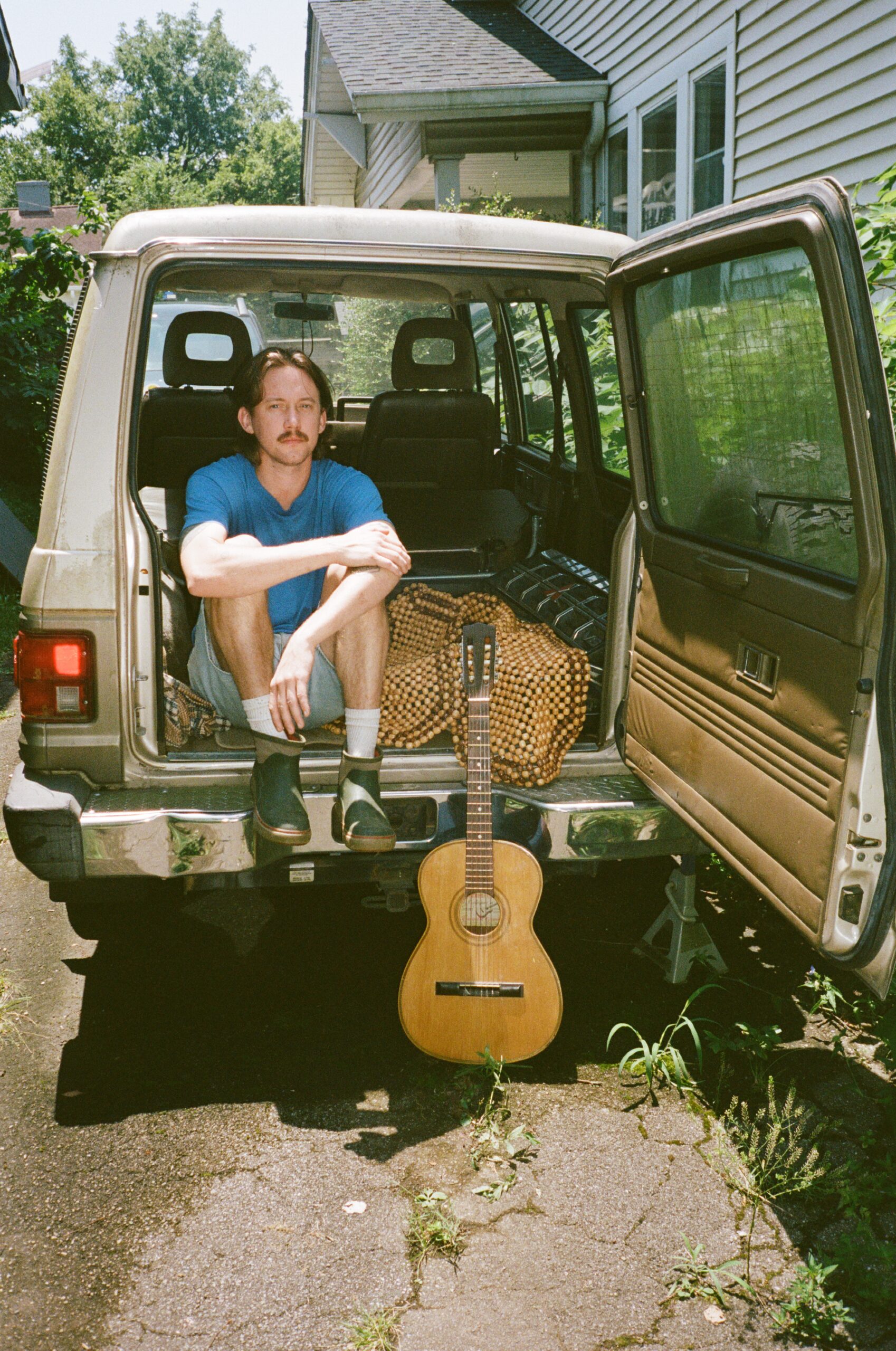
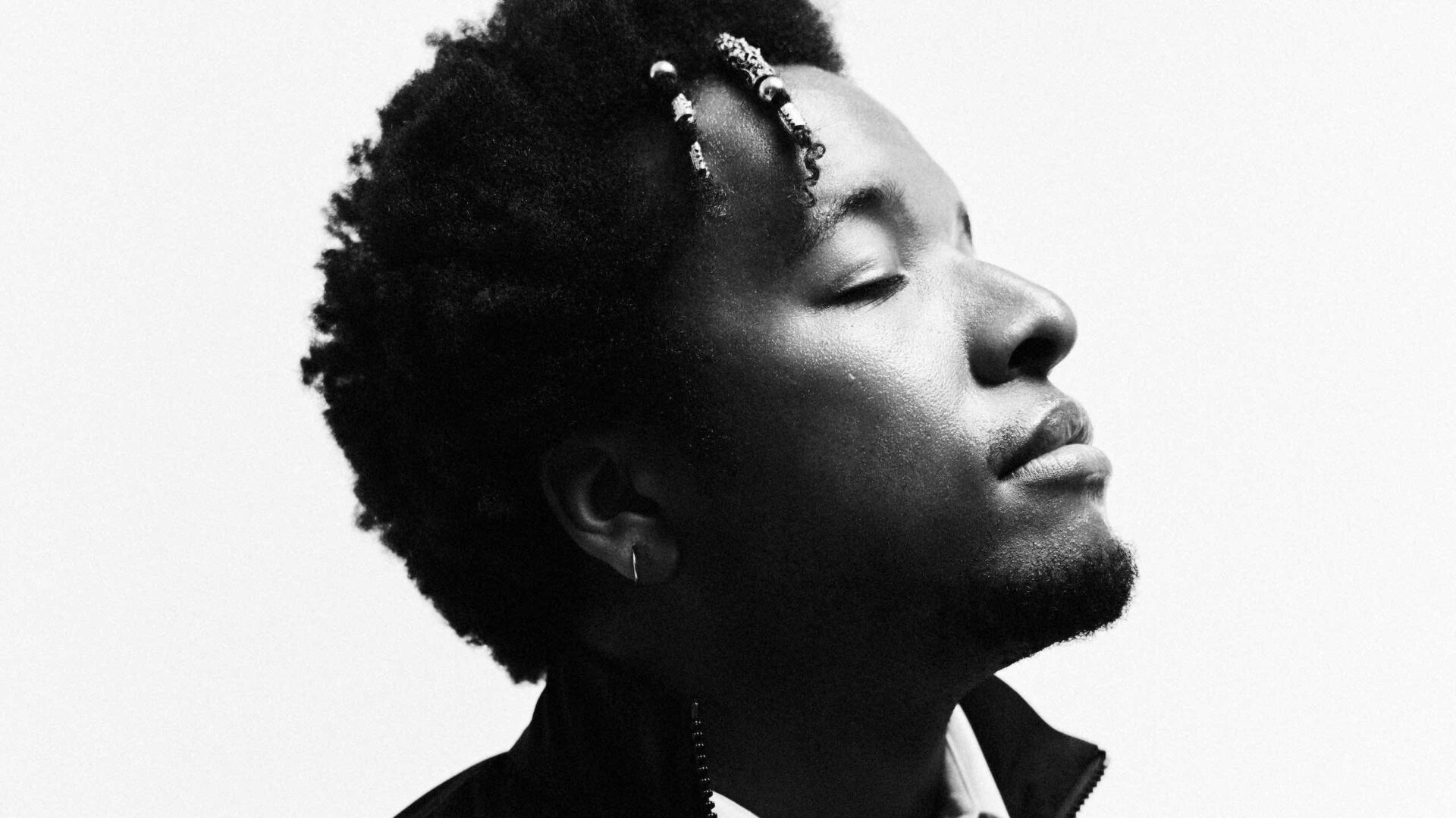
Singer-songwriter and multi-instrumentalist Joshua Karpeh, whose creative alias is Cautious Clay, had dozens of songs banked and unreleased when he ideated on packaging them together to cover all hours of the day. The result was last year’s releases called The Hours: Morning then The Hours: Night, now available on a single LP (covering sides A and B, respectively). What was left, then, makes up The Hours: High Noon — a quick, eight-song final installment of the project, out now.
After having covered his self-released debut record in 2021, then hosting the artist in WNXP’s Sonic Cathedral for a stripped-down performance and conversation the following year, it was great to once again have Cautious Clay On The Record with WNXP. The full conversation is available here, as are select excerpts, plus on WNXP’s Podcast Channel.
The songwriting process
Celia Gregory: Take us back to the time when you realized, OK, I have songs that I can arrange in such a way. Or did you start with the concept and then write to it?
Cautious Clay: I started with the concept. I also have many, many, many songs that are unreleased. When I first started the project, I had like 60 songs that were varying degrees of finished. A lot of them, like I thought, “OK, maybe this could work here or there,” but I continued to write and I continued to whittle down different ideas in different ways that I felt like could relate these songs to particular times of day. I wanted to make an album or like a project that felt like there was this theme but it was also pretty low-touch in the sense of like what do I feel like at these particular times of day? It’s like you eat spaghetti for dinner and eggs for breakfast. Music is kind of similar. When I wake up, there are definitely things I don’t wanna hear and the things that I do wanna hear. So I really wanted to get into that head space about the process of it. That’s really where the genesis of the idea came from. And some of the songs I did end up writing are many years old. Some of them I wrote a couple days or a couple months before that actually came out. So it was really just a filtration process of just connecting the songs to particular times.
CG: I wondered if you had started when you were supporting your namesake record, your second LP, which I love, Karpeh. We can go back to that time, too, but to have some that you’re like, “No, actually this fits this project. I haven’t had a place for it yet, but I could feel this being, say, 3 p.m.,” right? That’s such an interesting way to work. How do you approach songwriting? If you said you had that much banked, you just fit it in where you can when you’re not actually writing for a record or recording in studio?
CC: Yeah, I mean writing to me has always been just a practice, really. It’s a muscle. And I am very thoughtful with what I write, but for me it’s not hard to just write a song. It’s very much a practice…I think it’s really more like what I attach to it and what I end up building out with it musically. But the actual process of writing to me is just like a part of my connection to myself. They kind of are separate, like writing is separate from the musical part, but now that I’ve done both of them for many, many years, putting them together is almost kind of like peanut butter and jelly. But sometimes I’ll find myself as of late writing an entire song without having a melody and I’ll just like write the whole song.
CG: Just lyrics first, just poetry.
CC: Just poetry, but then I can fit it into like something that I have here that is some sort of melodic structure or the guitar playing… A lot of times it’s bass, actually, because I think bass is very underrated as a melodic instrument. It’s the bass line, it has the heart and soul of so much. Even if it’s simple, there’s a lot that you can do with melody that is almost like counterpoint, is what they’d say in classical music. That’s the beauty of something and then everything in between it can sort of inform how you’re feeling about it, like what chords you end up putting around it.
I feel like music is such a spiritual practice and so I did study music and minor in jazz studies, but — and I think I’ve had this realization for a long time now — because I do love people who are skillful and know their instruments, I revere them, actually. I think it’s such an important part of enabling yourself to create beautiful music. But I think the biggest and the highest form of expression through music is actually bravery. Bravery over skill. Because that is where people feel the most seen and the most inspired to connect to something, you know? And so that’s why you have like little babies who make music and then all these geniuses or whatever, but then everybody in between is just trying to fit into the formalities of it all.
Avoiding being pigeonholed
CG: Can you cite maybe a moment or a song on this Hours project that you felt like you had to be particularly brave, and it was like bravery steering and not skill? Is it brave about saying how you feel and expressing how you feel or is it bravery musically to take a risk and do something different?
CC: I think it’s all the above. It’s a reflection of that human experience. And it does vary for people. I think sometimes for me the way it shows up a lot in music is like the lyrical content sometimes can be very revealing about myself or like, OK, this is like something that I’ve actually gone through or have a connection to…I think there’s an element to it that is a trust in yourself to explain what’s going on or to showcase something that feels authentic, I guess, in some way. So I think that’s the most important music. And it doesn’t have to be serious. That’s not what I’m saying at all. It just has to feel authentic…that’s why people connect to what they connect to, you know?
CG: I mean, there’s something there too, right? People like abstract, like “arty,” masked music, too, if it appeals to them artistically. But what you’re saying is you’re moved to create and you connect as a fan of music to the real shit, like the heart of it. That is how you took off as an artist, even before you released [debut record] Deadpan Love. People were approaching you and listening to your music, sampling your music because of the heart in it. Did you ever feel pigeon-holed as like a love songs guy? Like a sweet boy?
CC: A little bit, definitely. I branched out with different things because of it. There was a whole moment where I felt like, “OK, I have the voice and all of this” and I never rejected it. I always appreciated it and I started to understand the impact that it had. But I do feel like there’s a lot of other things that I connect to around music, that I have connected to even before singing. So that has been something that I’m embracing now more in my new music and the future of my music and in things that inspire me.
Tracks on High Noon
CC: I feel like the afternoon time is such a like… people are working, they’re busy, they’re focused on a lot of things. And so for me the music kind of felt like energetically smoother…there’s more reggae influence and some down-tempo stuff. But, lyrically, too, it felt a little bit more fun and lighthearted, but there is that little tinge. Like “Green Screen (1pm),” for example, it’s like we’re all living in a simulation. There are elements of life that we can’t explain.
Then there are songs like “Trail Mix,” which are kind of talking about open relationships or people being open about their intimacy in ways that are fun and interesting. There’s a little bit of more folksy, country elements to a song called “Wave Chaser.” I actually did that one with this guy Nate Mercereau, who was on the Andre 3000 album, which was really fun recording that one. I would say “Wave Chaser (6pm)” and “Trail Mix (3pm)” are probably the two that I really connect to most.
Reflections on second LP, Karpeh
CG: I didn’t get to talk to you in real time about Karpeh. This was ambitious in a different way. I think musically, I was surprised. I was super stimulated by it. Have you gotten to jam like that and be in a collaborative space like that as a creator [where normally] it’s you and your songs and your instruments? Have you gone back to that place musically and do you get to do it even just for fun?
CC: Yeah, I mean, I do often actually, it’s a blessing. Like I have a lot of really good musical friends and people that I jam with maybe every other week. But yeah, that album was a big reclamation, I think, of music for myself. Not that I wasn’t being myself before, but I think there’s that stereotype about people who are like, “Oh, I’m making my ‘arty’ album.” For me it was more like I love jazz and it’s American music, it’s African-American music. There’s a lot of depth to it. It really does reflect a part of me, a part of my family and a part of my story. It just felt really cool and fun and I got to collaborate with some of the premier jazz artists that I really, really, really love and bring them along to tell the story of the relationship of my grandparents and how that affected my parents and so on and so forth. It was just an awesome opportunity for me to do that in a way that really shepherded a bunch of incredible musicians along to my vision, which was really cool. I feel like it was also just a great experience.
CG: I love all the musical voices represented, but also the actual family voices. Like anytime somebody puts spoken word, their parents or grandparents’ voices to record, I think, “What a blessing that that’s forever now.”
CC: Yeah, my grandfather was 102 on that recording, so it was really cool. That’s why the song was called “102 Years of Comedy” because he’s like a funny dude. He was a year younger than Charlie Parker. He passed in 2023, like the later that year. So I was really glad to.
CG: He got to hear the record?
CC: Yeah, he did.
CG: That’s beautiful.